Categories
Uncategorized

Faking it: how to come clean to your audience

Until Thursday, Mamoru Samuragochi was a decorated classical composer and a tunesmith whose pen game and personal triumph placed him among the most celebrated of living Japanese composers.

Samuragochi initially made waves writing the scores to a couple of video games: “Resident Evil: Dual Shock Ver” and “Animusha: Warlords.” With the landmark “Hiroshima,” his first symphony, he gained widespread acclaim. Samuragochi moved 100,000 units out the stores — an impressive number for a classical release.

“Hiroshima” also drew attention to Samuragochi’s family’s tragic past. He hails from the Hiroshima Prefecture, and when the US dropped the atomic bomb there in 1945, his parents, according to Samuragochi, were both irradiated.

Did we mention he was deaf?  Media outlets billed Samuragochi as the “Japanese Beethoven.” A deaf composer defying the odds, crafting all this in his head! He was a man for all centuries, maybe the next classical music heavyweight.

Except, he wasn’t. Turns out that Samuragochi may have beenprobably was …….. definitely was a fraud, through and through. A complete huckster.

So … who wrote “Hiroshima” then? What about his “Sonatina for violin?” The video game music?

Ladies and gentlemen, allow me to introduce: Takashi Niigaki.

Samuragochi’s story started to unravel when a music critic, Takeo Naguchi, started poking into Samuragochi’s biography. Mr. Niigaki came forward Thursday with the truth after hearing about Naguchi’s inquest. Turns out all that music that had audiences abuzz was written by a part-time professor (with a full range of hearing).

So what part of Mamoru Samuragochi’s biography is true — is he deaf? Has he written even a note of music? Did critical fervor for Samuragochi’s stuff — really, Niigaki’s stuff — drown out logical questions that follow a seemingly unbelievable backstory? In order: we don’t know; we don’t know; and … probably, yes.

But before you grab the pitchforks and torches, take a hit from this L.

We’ve still got a no-name composer out there (now you know his name! All together: “Takashi Niigaki!”) who tapped into pain and poignancy, wrote a heady piece that won over audiences, and did a tidy 100,000 units. People are paying money to hear this thing. Maybe the fraud leads to bigger sales, bigger performances, more accolades. Everybody loves a good redemption story.

If this really bugs us then that’s on us. We need to stop searching for that tearjerker Hollywood-ready backstory and just start listening. It’s an art and a craft, so pay homage to the real ones. Forget the fakes.

Not to worry for Mr. Samuragochi. I’m sure they’ll let him lace up for a celebrity boxing match.
Categories
Uncategorized

$6M Strad stolen after owner TASED

Fox 6 Now Milwaukee is reporting that Milwaukee Symphony concertmaster Frank Almond was tased Monday by two hoodlums, who then made off with his Lipinski Stradivarius. Ouch.

It’s amazing more instruments aren’t stolen. Most musicians aren’t built like the Ultimate Warrior, and the upside of a successful theft could be tens of thousands, minus the obvious residual bad karma.

Maybe it’s time we start looking at cheaper schemes for getting our classical kicks — like instruments made from uh, bike parts?

Anyway, if you live in Milwaukee be on the lookout for an old-school Dodge or Chrysler minivan, because of course that was the getaway vehicle.

Categories
Uncategorized

Video game music: classical music’s gateway drug

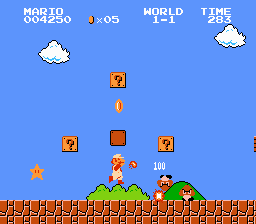
The Super Mario Bros. theme is arguably -- but seriously, definitely -- the most-recognized video game theme. (Okay, you can make a case for Tetris.)

The old school video game composers knew how to write a tune.

It just so happens that when you take video game music out of the console, flesh out the harmonies and spread the parts across an entire orchestra, amazing things start happening.

Technology limitations fall away. Bass lines get deeper, textures richer, melodies more soaring and beautiful. Here are a few of the most irresistible.

‘Final Fantasy VII’

Hironobu Sakagachi’s “Final Fantasy VII” put the music front-and-center, offering Nobuo Uematsu’s in-game soundtrack in a simultaneous, four-CD release. It’s MIDI-tastic, but in the hands of an able symphony classical atheists  can have a conversion experience.

‘The Legend of Zelda’

Koji Kondo was the mastermind behind the original theme for “The Legend of Zelda.” The game first appeared in 1986 and went on to sell 6.5 million copies. Safe to say people got pretty damn familiar with the Zelda theme, but they never heard it like this.

Kondo didn’t just pen the big themes for Legenda of Zelda. He also influenced game design by having players play a recorder (warning: very nerdy, detailed tab right there) to access secret levels.

‘Chrono Trigger’

Yasunori Mitsuda presided over this one, although Mitsuda was so driven to finish the orchestration of “Chrono Trigger” that he made himself gravely ill.

Mitsuda’s efforts didn’t go unnoticed. The game’s music has been remixed hundreds of times — it’s as irresistible as a James Brown drum break is for rap producers.

First one’s for free

Composers aren’t the only ones vibing to 8-bit ballads. Berklee College of Music enjoys sell-out shows for its Video Game Orchestra. (That’s their “Chrono Trigger” remix above.) Audiences are twisting up J’s while staid orchestras give over their programming to video game music.

Play it for your friends, bump it in your car and on the subway. Video games will rope unsuspecting listeners into loving classical music. Heaven help our children.